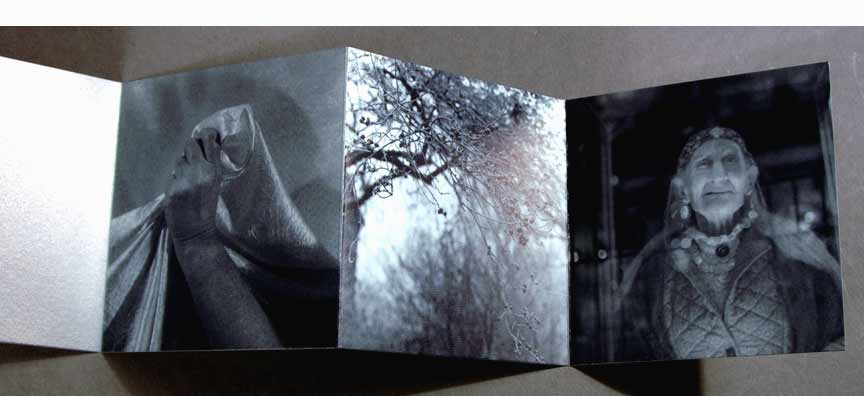
Here are my few finished prints for the emulation project. To be honest I am not pleased with my work. I set out to emulate George Inness but I did not succeed. Instead my work is very dark which is nothing like Inness. This style is a bit like Jacob van Ruisdael.
For my emulation project I will be emulating George Inness. I decided to emulate him because I am interested in shooting more landscapes and that is his main topic. I hope to emulate the overall feel of his paintings.
Other than my iPhone work I also experimented with color film for third quarter. These photos were taken with color negative film and then scanned onto a computer. Only minor adjustments like brightness and contrast were made, as well as spotting. These were all taken at Smith Rock State Park
Recently I have been experimenting taking photos with my iPhone. Over the years the quality of phone cameras has greatly increased. Currently the iPhone has one of the best cameras and can produce some really great images. There are also a number of apps that can assist in creating these images like "Camera+" and "Snapseed". Here are some iPhone images that inspired me.
Jimmy Mazur (Winning image of the 5th Annual iPhone Photography Awards)
For my quarterly independent project I will be focusing on camera tossing. Camera tossing, which is a form of kinetic photography was pioneered by Ryan Gallagher, a few years back. His work can be seen at both www.kineticphotography.net as well as cameratoss.blogpot.com. A photo can only be called a camera toss if the picture is taken while the camera is in the air. There are two main types of camera tossing. The first type is shot in a dark room using a few different light sources and a long exposure. You spin and or flip the camera to create interesting designs. Here are some examples and a video which explains the process.
Photo by Beatrice Murch
The second type of camera tossing, which most people think of involves using a self timer and actually throwing the camera up above you, spinning it and hoping that it takes a picture of you looking up at it, or something else. Obviously this involves some luck, and lots of trial and error. Usually a wide angle lens is used for this so you don't need to throw it too high. You can use a fast shutter or a slower one to create a blur effect.
Diptychs and Triptychs are the combinations of images placed right next to each other to draw a comparison or make a statement. Diptychs use two photos and triptychs use three. Sometimes the photos are very similar and sometimes they are completely different. The photos also be arranged linearly or vertically.
David Hockney started making photo-collages, or joiners, as he called them, in the 1980's. Hockney started with Polaroid prints and then later used 35mm commercial processed prints. According to Hockney he created the art of joiners on accident. He like the idea of using a wide angle lens, however, he did not like the distortion they caused. He like joiners because the final piece created a narrative as if the observer is walking through the setting of the picture, looking at it from multiple perspectives. The fact that the photos that make up a joiner are taken from multiple perspectives makes the work very similar to cubism. Here are some examples of Hockney's joiners:
Cubism was pioneered by artists like Pablo Picasso and Georges Braque in the 20th century. It was mostly used in paintings and sculptures. In a normal piece of art you view something from one viewpoint. However, with cubism the artist attempts to depict a subject from multiple viewpoints. This results in a more abstract form. Here are three examples of cubism by Picasso:


+The+Lone+Farm,+Nantucket+1892.jpg)